Our Focus Is
Utilizing the latest technology
AI Search: Smarter Results, Faster Growth. Unlock new opportunities with intelligent SEO.


In an era where prospective clients ask AI assistants for legal guidance before ever opening a web browser, the digital landscape for law firms has fundamentally shifted. Generative AI is no longer a futuristic concept but a present-day reality that is reshaping how legal services are discovered, evaluated, and chosen. For law firms aiming to secure a competitive edge, implementing a sophisticated AI content marketing strategy is no longer optional; it’s essential for survival and growth. Contact us today or send us a message to discuss the future of search and how it is impacting your firm.
To grasp the magnitude of the current transformation, it’s important to understand that AI search is not just a fancier version of traditional Google. It represents a deep, architectural change in how information is processed and ranked. For decades, Search Engine Optimization (SEO) was largely a lexical game—winning was about using the right keywords in the right places. AI has changed the rules entirely!
The new model, often referred to as AI Mode, breaks content into individual passages and converts them into mathematical representations of meaning called “embedding vectors.” When a person submits a query, the search engine compares the meaning of the query to the meaning of these content passages. Relevance is now determined geometrically by how close your content’s vector is to the query’s vector in a multi-dimensional space.
So, what does this mean for your firm?
It means a page can be considered highly relevant to a search about “dividing a business during a divorce” for example, even if it doesn’t use those exact keywords. As long as the passage’s meaning aligns with the user’s intent, the AI engines are highly likely to find it relevant.
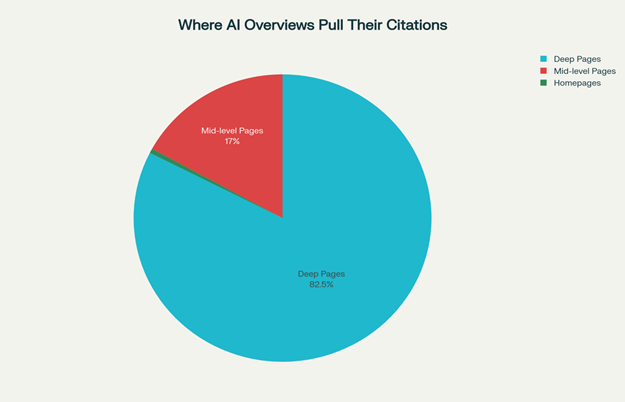
This shift makes many legacy SEO strategies obsolete, and it elevates the importance of deep, contextually rich content that demonstrates a true understanding of the subject matter.
This move from keywords to meaning drives several key differences in how search results are presented:
You probably know your law firm needs a website. But what about one of those do-it-yourself (DIY) options that are so popular online? After all, maybe you can just create something workable in a few hours.
While some of those sites, like Wix, are simple to build with drag and drop elements, they aren’t effective marketing tools. You won’t end up with a unique website that is SEO-optimized, and it likely won’t deliver the results you want long-term.
A professionally designed and built law firm website doesn’t have to break the bank or take a year to complete. A professional web design company takes the time to understand your goals and will translate them into a finished product that reflects your firm’s vision. Your website will be truly customized, appeal to your target audience, and support your brand’s growth.
Effective law firm website design is about much more than simply having a website; it’s about creating a website that engages your target audience, reflects your brand’s unique voice, and directs potential clients to take desired actions. With a strong website, your law firm will sign up more clients and achieve better overall results.
Our website design professionals have years of experience creating attractive and effective law firm websites. We help get your legal website right the first time by incorporating elements of a great design, including:
This fundamental change in search technology represents a pivotal moment for the legal industry. For any firm that has felt as if they are a step behind in digital marketing, this is a golden opportunity to not only catch up but to take the lead.
Because AI search optimization is still a new frontier, the majority of law firms have not yet adopted these strategies. They continue to rely on legacy thinking, focusing on tactics that are losing their impact. This creates a significant window of opportunity for forward-thinking firms to gain a powerful first-mover advantage.
By investing now in building the deep content and technical authority that AI models reward, your firm can establish itself as a trusted source for AI LLMs. The authority you build today gets reinforced every time an AI model cites your content, creating a compounding loop of visibility that becomes increasingly difficult for competitors to overcome.
This early adoption can lead to significantly better marketing results and a sustainable competitive edge for years to come. This helps position your firm as the “go-to” authority in your market while others are still trying to understand the new rules.
Content remains the cornerstone of any digital marketing strategy, but the standards for “high-quality” have been elevated. AI models prioritize content that demonstrates profound Experience, Expertise, Authoritativeness, and Trustworthiness (E-E-A-T)—the very framework Google uses for the human feedback that trains its AI.
To signal comprehensive authority, your content strategy must shift from targeting individual keywords to owning entire topics. This is achieved by building “topic clusters,” which consist of a central, long-form pillar page on a core practice area, surrounded by a network of supporting pages and articles that address specific subtopics and questions.
For example, a personal injury firm might create a pillar page on “Car Accidents in [City/State].” This cornerstone piece would be supported by more granular blog posts covering:
Each supporting piece links back to the pillar page, creating a tightly woven web of content that proves to AI systems that you are a definitive resource on the subject.
E-E-A-T is not an abstract concept. Rather, it is a set of concrete signals that you must embed in your content.
Your firm’s brilliant legal analysis is invisible if AI crawlers cannot efficiently access, parse, and understand it. Technical SEO provides the clear roadmap that AI systems need to make sense of your content and its context.
Schema is a vocabulary of structured data that you add to your website’s code to provide explicit explanations of your content. It is one of the most powerful ways to help AI systems accurately extract and feature your firm’s information. Key schema types for law firms include:
In the AI era, your website is your home base, but your authority must be built everywhere. AI models gather information from diverse sources across the web to verify your firm’s credibility and understand its reputation.
Since most legal questions have local intent, a strong local SEO strategy is essential for building trust with both clients and AI.
Is It Ethical to Use AI for Law Firm Marketing?
Yes, but it demands rigorous human oversight. The use of AI in marketing is not inherently unethical, but all content must comply with legal advertising rules, such as ABA Model Rule 7.1, which prohibits false or misleading communications. Legal experts must review, verify, and approve any content to ensure its factual accuracy and ethical compliance. The duty of supervision remains squarely with the firm’s attorneys and their marketing team.
Can We Just Have AI Write All Our Content?
This is a significant risk. While AI can be a powerful tool for generating first drafts, brainstorming ideas, or creating outlines, it cannot replicate genuine human experience or provide unique legal insights. Relying solely on AI can produce generic, repetitive content that lacks the E-E-A-T signals necessary to rank. The most effective approach is to use AI as an assistant, with humans refining the final product to add your firm’s unique voice, perspective, and knowledge.
What’s the Difference Between AI Search Optimization and Traditional SEO?
Traditional SEO has primarily focused on on-page keywords, technical signals, and backlinks to get a specific page to rank. AI Search Optimization expands on this by focusing on building the firm’s authority as a recognized entity. It prioritizes creating comprehensive topic clusters, demonstrating E-E-A-T across the web, and structuring data so that AI can easily understand and trust your expertise enough to feature it in a direct answer. While traditional SEO is a necessary foundation, Generative Engine Optimization (GEO) is the next evolution required for AI visibility.
Will Traditional SEO Still Matter?
Absolutely. AI search optimization is built upon the foundation of traditional SEO. Google’s AI models are fed by its core web index, and research confirms that 99% of sources cited in AI Overviews already rank on the first page of traditional search results. A strong technical SEO foundation, high-quality content, and an authoritative digital presence are prerequisites for being featured in the AI-powered search landscape.
The shift to an AI-driven web is a paradigm shift that rewards firms that can authentically prove their authority and consistently provide value. By embracing the principles of deep content, technical excellence, and a robust digital presence, your firm can build a durable and trustworthy brand that thrives in the age of AI.
At TDL Legal Marketing, we integrate these complex elements into a comprehensive program designed to ensure your firm is not just found, but featured, cited, and preferred by the next generation of clients.
If you are ready to position your firm as the definitive authority in your practice areas, contact us today for a consultation.